

Industrial finance team reviewing project documents in a Canadian boardroom

Why this page

How funding choices shape project risk, supplier relationships, and day to day operations across your sites.

Old models treated finance as a final stamp on an engineering plan. Our team sees it as a conversation that starts when the first scope document appears. Here we outline how funding options, repayment timing, and operational risk interact for Canadian industrial projects. No forecasts. No promises. Just plain language framing you can use in internal briefings and board packs.

Talk with us

Our working method

Step one context

Our team starts with a straightforward mapping exercise we call the Context Grid. You list major industrial assets, planned projects, and known constraints. Then you mark where financial pressure is already visible. This is not a forecast or a valuation. It is a snapshot that helps your leadership group talk about the same reality, instead of debating different versions of it.

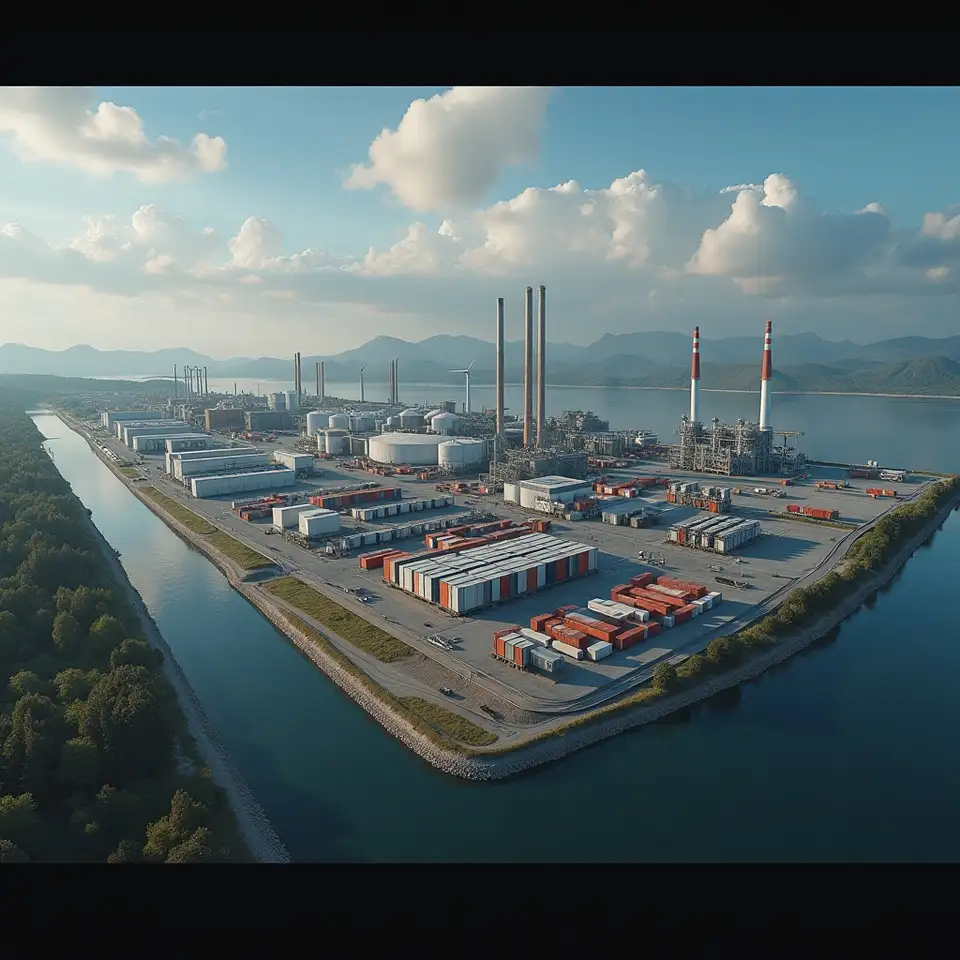
Overview of Canadian industrial facilities used for finance context mapping
Team mapping industrial finance scenarios on a wall with notes

Step two scenarios

Next, we use what we refer to as the Scenario Strip. You sketch two or three simple paths for a project, each with different timing and risk emphasis. One might favour operational continuity. Another might favour balance sheet flexibility. None is perfect. Each is a tool to surface assumptions that often stay unspoken in formal reports.

Step three impact

Then comes the Impact Notes stage. Here, you document how each scenario would touch safety, labour, supplier stability, and compliance oversight. The notes are short and candid. They are meant for internal use, not external promotion. Over time, these notes become a record of how your organisation thinks about industrial finance decisions.

Step four review

Finally, we recommend a short After Action Review once a decision is made. Our team looks back at the original context, scenarios, and impact notes. We highlight where judgement aged well and where it did not. This is not about blame. It is about building a more honest memory of how financial choices were made, so the next project benefits.

How we frame decisions

Seeing projects clearly

Capital projects used to be framed as single events. A build. A retrofit. A new line. Our team treats them as ongoing stories, with each phase funded, reported, and reviewed differently. We describe how timing of cash outflows, supplier terms, and maintenance allowances interact. The goal is not a perfect model. The goal is a shared narrative your leadership team can challenge and refine together.

Connecting numbers

Many enterprises still separate finance and operations in their internal reporting. That divide makes industrial decisions harder than they need to be. On this page, we show practical ways to align plant metrics with funding language. We focus on what can realistically be tracked in your existing systems, not on idealised dashboards that never get built.


Operations and finance leaders discussing an industrial project together
Risk and finance team reviewing industrial project documentation

Bringing in risk

Compliance teams often arrive late in project conversations. By then, key financial choices are already locked in. We outline a more candid approach. Bring risk and compliance voices into early scenario work, and document their concerns in simple, repeatable formats. This reduces friction later, and gives senior leaders a clearer view of trade offs.

Aligning stakeholders

Vendors, lenders, and internal sponsors all frame value differently. That tension can either stall a project or sharpen it. We suggest a basic alignment method our team calls the Three Lens Review. You look at every major decision through operational continuity, financial resilience, and stakeholder accountability. The method is simple enough to reuse, but structured enough to stand up in scrutiny.


Inside the decision rooms

Images on this page are prompts, not promises. They help ground industrial finance conversations in real spaces, people, and documents you recognise from your own organisation.

Industrial finance context

Yesterday, industrial finance felt opaque and distant from day to day operations. Today, our team treats it like a working file on your desk, open to questions and challenge. We write as reporters, not promoters. We trace how capital decisions move through procurement, operations, and compliance, and we name the trade offs along the way. You see where financing supports resilience, and where it quietly adds pressure to your risk profile. This page gathers structured explanations, written for Canadian enterprises that manage plants, fleets, or large infrastructure. We avoid jargon where we can, and we flag it when we cannot. Our aim is simple. Give your leadership team shared language for talking about industrial finance choices, before the next major project goes to approval.

How our perspective helps your internal debates

Our team writes about industrial finance the way we would brief a cautious executive team. Direct, structured, and honest about what we do not know. We focus on how capital decisions affect plants, people, and long term resilience, not just quarterly numbers or short term targets.

Plain language, grounded in operations

Industrial finance conversations often stall because people mean different things by the same terms. Our team writes in plain language first and introduces technical words only when needed. Each explanation focuses on how a concept shows up in real plant decisions, not in abstract models. This makes it easier for operations, finance, and compliance leaders to stay aligned over time.
Short, direct explanations
Examples tied to plants
Language your board uses

Practical methods for busy teams

Many frameworks treat industrial finance as if every organisation had perfect data and unlimited analyst time. We take a different path. Our team assumes your systems are messy and your people are busy. The methods on this page are designed to work with existing reports and modest adjustments, so you can apply them without a large internal project.

Uses current reporting
Respects limited capacity
Built for real teams

Grounded in Canadian requirements

Canadian enterprises operate within specific regulatory expectations and local lending practices. We acknowledge that context openly. While we do not provide legal advice, we frame financial choices in ways that make compliance conversations easier. This includes noting where additional legal or accounting review may be appropriate before decisions move forward.

Canadian context first
Compliance aware framing
Clear review touchpoints

Candid about upsides and downsides

Our investigative stance means we do not treat any funding option as inherently good or bad. We ask what it does to your resilience, your relationships, and your reporting. We call out downsides alongside potential benefits, so leaders can see trade offs early. This approach supports more balanced conversations in risk and audit committees.

Names trade offs early
Balanced, not promotional
Supports audit dialogue

Why our approach fits risk aware leaders

Our team writes as observers who have sat in many project rooms and board discussions. We know that industrial finance choices rarely follow a neat diagram. By naming common patterns and offering simple internal tools, we aim to support your existing governance rather than replace it. Everything here is written for cautious, risk aware leaders in Canadian enterprises, updated for 2026 realities.

Investigative view of project decisions

We approach every industrial finance topic with an investigative mindset. Our team traces how a decision moves from early idea through internal approval, external negotiation, and later review. This perspective helps you spot gaps in your current process, without needing to adopt a heavy external framework or disruptive overhaul.

Inclusive of all core stakeholders

The methods we describe are built for cross functional teams. Operations leaders, finance managers, and compliance specialists can all recognise their role. We avoid dense theory and focus on steps that can be tested in a single project, then refined gradually as your organisation gains confidence.

Reusable internal tools and templates

Our team favours repeatable templates over one off reports. Tools like the Context Grid, Scenario Strip, and Impact Notes are meant to be reused. Over time, they create a consistent trail of how your organisation thought about industrial finance choices in different market conditions.

Focused on Canadian industrial context

We write with Canadian enterprises in mind, from heavy manufacturing to logistics and infrastructure. That means acknowledging local financing norms, regulatory expectations, and practical constraints. While every organisation is different, this shared backdrop makes the examples on this page easier to adapt.

Calm, non promotional perspective

Our stance is intentionally calm and measured. We do not promise outcomes or specific financial results. Instead, we help you ask better questions and document your reasoning. This supports more resilient decision making when conditions change or when leadership transitions bring new perspectives.

Multi disciplinary team experience

Behind this page is a small, experienced team that works closely with risk, finance, and operations leaders. Roles span analysis, operations review, and governance support. We draw on that mix when we describe how decisions play out across departments, rather than viewing them through a single narrow lens.